Wednesday, November 9, 2011
Sunday, November 6, 2011
RAMPHAL
fdLlk jkeQy&deyk
okrkZ%& xkao fcdykuk dh Lo;EHkw iapk;r tc ;g rkfyckuh Qjeku lqukrh gS fd jkeiQy vkSj deyk cgu HkkbZ ds :i esa jgsaxs rks jkeQy nckc esa bl QSalys dks Lohdkj dj ysrk gSA Lo;EHkw iapk;rh jkeQy dks deyk ds ikl ys tkrs gSaA deyk dks tc lkjh ckr dk irk pyrk gS rks og dgrh gS% ej tkm¡xh ij bl iapk;r dk ;q ifjokj rksM+d QSalyk ugha ekuwxhaA deyk jkeQy dks D;k dgrh gSA Hkyk%
jkxuh&1
rtZ pkSdfy;k
[kqn C;kgh eSa ckg.k dgoS] fi;k èkeZ ugha lS rsjkAA
iapk;r esjS Qkalh ykjh] bleSa dlwj ugha lS esjkA
iapk;r dh nkc ekudS] euS eruk xsjS ujd eSa
le> ugha ikbZ D;wdj ruS] djyh uhr Qjd eSa
ruS HkkbZ dksU;k ekuwa&pkgs] gksT;ka tek xjd eSa
mQij uS flj Bkjs ipak;rh] vglagkj vkSj gjd eSa
jgh gkFk tksM+ er izk.kukFk] djks nhos rSys vaèksjkAA
pkyhl ?kj mtM+ T;kaxs] tS Qjeku flj ekFkS uk yk;k
jkBh xksr dh nknk fxjh] vkt nfg;k ?k.kk ?kcjk;k
bu xksrka ds pDdj uS] nqfoèkk eSa jkeQy Qalk;k
eku dS Qjeku rkfyckuh] eSa cgksr ?k.kk iNrk;k
iapk;r mtkM+Sxh cL;k clka;k] xjhcka dk ?kj MsjkAA
nqfoèkk eas nksuksa tkoSaxs] uk ek;k feyS jke uk jke
osQ lksp oSQ ruS fi;kth dj;k ;ks ?kfV;k dke
Fkw&Fkw djrs yksx yqxkbZ] lkjs 'kgj vkSj xke
yM+k yM+kbZ feydS fi;k] iapk;r dS dlka yxke
bZcdS rksM+ fn;k rks cpkaxs] uk iapk;r ?kky jgh ?ksjkA
th esjk fra: Mwcaw Fkk] euS ys fy;k bZc lEHkkyk
rsjk lkFk fuHkkm¡ deyk] pkgs gks T;ku dk xkyk
,d vkSM+ uS gksuk gksxk] [khapX;k èkqj dk ikyk
yM+kbZ dS EgS lkFk jgoSxk] j.kchj cjksus vkyk
l?k"kZ djksxs lc feydS uS] tc iVS ns'k uS csjkAA
okrkZ%& deyk dks mldh uUn
jkxuh&2
uUn% D;ksa jksoS deyk HkkHk] dg ns eu dh ckr uSA
deyk% ds cw>Sxh uunh ?k.kh dkYyh gksjh lS xkr eSaAA
iapk;r uS ds gd lS D;ksa Qrok blk ?kqek;k jh
vius ifr us HkkbZ cuk ?kfV;k gqDe lquk;k jh
muuS ds gd ls HkkHkh dksVZ D;ksa fcBk;k jh
;s iapk;r efgyk fojksèkh lcdS lkgeh vk;k jh
erukgkj ekfu;s tkuka iapk;rh vkSdkr uSAA
ifr HkkbZ cuk;k jh cs'kek± dh iapk;r uS
ftc pkgoS ifr ekuS] ftc pkgoS HkkbZ cukns ;k
nsds Qrok xksrka dk ek.klka uS dlkbZ crkns ;k
ijEijk dh ckr djrh cqyèkka dh gykbZ Y;kns ;k
vkSjrka ds gdkaa [kkrj dn iapkr cqykbZ fn[kkns ;k
gkslyk jk[k deyk uun [kM+h rsjs lkFk eSa
okrkZ% jkeQy dh cgu lhek o mldk thtk jkeQy dks cgqr le>krs gSa rFkk cqjk Hkyk Hkh dgrs gSaA lhek dgrh gS fd deyk gqM~Mk u gksdj ;fn jkBh Hkh gS rks D;k ckr gks xbZ\ dksbZ igkM VwV iM+sxk D;kA og deyk dk lkFk fuHkkus dh dle [kkrh gS vkSj vius HkkbZ jkeQy dks D;k dgrh gS Hkyk%
jkxuh&3
ckr Hkys dh dgw¡ HkkbZ dfr esjh ckr eSa Qhd ughaAA
Fkkjk deyk HkkHkh rkfga U;ksa Hkk.k cukuk Bhd ughaAA
muS Hkk.k dog.k dh lkspS osQ Qjd rsjh vkSj dlkbZ eSa
fouk'k dkys ;k foijhr cqf xbZ dkj.k le> HkkbZ eSa
jkeQy rsjh eka tkbZ eSa rsjh vkPNh ykxrh lh[k ughaAA
bruh ckr le> fy, ftlh djsxk mlh HkjS HkkbZ rwa
esjk rks bruk dguk D;ksa iapkr rS ?k.kk MjS HkkbZ rwa
uknkuh er djS HkkbZ rwa deyk dns ekaxS Hkh[k ughaAA
rsjh detksjh dk csjk HkkbZ IkkV fy;k lS lalkj eSa
ge efgykvksa dk gd HkkbZ ?kkV fn;k lS ?kjckj eSa
pqIih NkbZ lS ljdkj eSa Hkyk&cqjk jg;k nh[k ughaAA
dgS j.kchj jkeQy lqfu;s leka iqjkuk cny jg;k
[ksrh djuk [kkuk&ihuk C;kg eSa tkuk cny jg;k
xkssr dk ckuk cny jg;k pkyS iqjkuh yh[k ughaAA
WHY WE FORGOT ARYA BHATT
आर्य भट्ट क्यों भुला दिया
रमलू ठमलू नफे कविता सविता इतवार की ? नफे बोल्या- के रहया भाई। छोरा छोरी का तो बेरा नहीं पाट लिया। पंचायत नै दोनूं घरां का होका पानी बन्द कर दिया अर पिटाई करी। दोनूं घर गाम छोड़गे। सरिता बोली- फेर न्यूं गाम की गाम मैं क्यूकर काम चालैगा?सविता बोली-चौटाला गाम मैं जिब गाम की गाम मैं ब्याह होवण लागरे तो म्हारे गामां में बी तो 10-10 अर 15 -15 गोत होगे हरेक गाम मैं तो आड़ै गाम की गाम मैं ब्याह क्यों नहीं हो सकदा? षहर के षहर के षहर मैं तो ब्याह हो सकै सै फेर गाम के गाम मैं नहीं हो सकदा?ठमलू बोल्या-बात तो विचार करण की सै। जिस बात नै आपां इतनी घटिया मानां सां उसे बात नै करणिया गााम नै दो दो मुख्यमंत्री अर एक डिप्टी प्राइम मिनिस्टर दिया सै। सांघी गाम मैं बी बताया एक मिर्जापुर खेड़ी अर सांघी के बालकां नै ब्याह कर लिया थ बड्डे स्याणा नै बीच बिचाव करकै बालक फांसी नहीं टूटण दिये थे। वे दोनूं एच ए यू मैं बढ़िया जिन्दगी गुजारण लागरे सैं। इस गाम नै बी एक चीफ मिनिस्टर अर एम पी अर एम एल ए दिए सैं। पुरानी परम्परावां पर बी आज नये समों के हिसाब तै हटकै सोच्चण की जरुरत तो सै। बहोत सी पुरानी चीज जो हमनै नहीं छोड़नी चाहियें थी वे तो हमनै छोड़ दी अर जो छोड़ देनी चाहियें थी इनकी आपां ईब्बी जफी पारे सां। रमलू बोल्या कौनसी परम्परा भूलगे?सविता बोली- स्वयम्बर तै ब्याह करया था दमयन्ती नै राजा नल के गल मैं माला घाल कै। राम नै धनुश तोड़ कै सीता को वरया था। आज अपनी मरजी तै ब्याह करण आल्यां ताहिं फांसी का फरमान। पहलम आले भोजन विज्ञान नै बहोत पौश्टिक बताये। फेर हम तो भूलगे बाजरे की रोटी, गोजी अर खिचड़ी का स्वाद, राबड़ी, काली जाम्मन,पीहल, चने भ्ूान कै होले बना कै खाना भुलगे, गुड़ खाना भुलगे,डण्ड बैठक काढ़ना भुलगे अर आर्य भट्ट नै बी भुलगे। नफे- बात तो सही सैं फेर जमाना बदलग्या तो रंग याहे सबतै बड्डी कमजोरी सै म्हारी। आर्यभट्ट प्राचीन भारत का पहला गणितज्ञ ज्योतिशी था जिसनै पूरी दुनिया ताहिं जीरो का ज्ञान दिया। उसकी इसतै बी बड्डी बात या थी अक उसनै भू भ्रमण का सिद्वान्त सबतै पहलम भारत मैं दिया। प्राणी था।नफे बोल्या होगा इसका म्हारे तै के लेना देना? रमलू बोल्या-यू ए तो रोला सै। हम प्राचीन संस्कृति , प्राचीन परम्परा की बात करां अर उसके बारे मैं जानकारी जीरो होतै हमनै कोए बी भका सकै सै इस पुरानी परम्परा के नाम पै। अर और बी दिलचस्प बात उसके बारे मैं यासे अक जो कुछ आर्य भट्ट नै अपनी किताब मैं लिख्या उसनै तरोड़ मरोड़ कै पेया करण की बहोत कोषिष करी गई। आर्य भट्ट के ग्रन्थ मैं जड़ै जडै़ भू अर कु -पृथ्वी षब्द थे उड़ै उड़ै वे भं-तारामंडल-मैं बदल दिये। दूसरी बात या सै अक इसके ग्रंथ की हस्तलिपियां देया के अधिक्तर भगां मैं तै गायब कर दी गई। उसका जिकरा दूसरे बुद्विजीवियां ने बी करना बन्द कर दिया। लोक भय के कारण भास्कर प्रथम अर दूसरे बुद्विजीवियां नै भी आर्य भट्ट के सिद्वान्तां की व्याख्या भिन्न प्रकार तै करी। सोच्चण की बात सै अक यो लोकभय किन लोगां का था?यू भय समाज के उस हिस्से का था जिसके हित साधन मैं आर्य भट्ट का भू-भ्रमण का सिद्वान्त बाधक बणकै खड़या होग्या था। यू वर्ग था पुरोहित वर्ग,जिसका हित वेदां,धर्मषास्त्रां ,पुराण पोथियों के वचनां की रक्षा की साथ जुड़या औड़ था। आर्यभट्ट का नया भू- भ्रमण का सिद्वान्त पुरानी मान्यताओं का खंडन करै था।वेदां के अर धर्मषास्त्र के हवाले देकै‘अचला’ मतलब ‘पृथ्वी’
का जो लोक विष्वास कायम करया गया था उसन टिकाये राखण मैं सबतै फालतू हित पुरोहित वर्ग का था। प्रभावषाली समाज का तबका लमकै विरोध करया। यूरोप मैं आर्यभट्टके सिद्वान्त का प्रचार हुया अर उड़ै कोपरनिक्स का सूर्य केन्द्र सिद्वान्त भी उभर कै आया अर ब्रूनो नाम के बुद्विजीवी नै घूम घूम कै यूरोप के नगरां मैं इसका प्रचार करया। रोम के इसाई धर्माचार्यां के हुकम तै 1600 मैं ब्रुनो को जिन्दा जला दिया गया। आर्यभट्ट के सिद्वान्त का भारत मैं विरोध अर यूरोप मैं ब्रूनो का जलाया जाना एकै बात सै। आया किमै समझ मैं परम्परा का खेल?
विश्वनाथ मंदिर क्यों तोड़ा ?????
साम्प्रदायिक लोग औरंगजेब के बारे में कहते हैं की उसने धर्मिक घृणा के कारण मंदिरों को गिराया , जबकि ऐतिहासिक तथ्य कुछ और ही सच्चाई बताते हैं | वाराणसी का विश्वनाथ मंदिर औरंग जेब ने क्यों गिराया ? इसके बारे में डा- पट्टाभि सीतारमैया ने दस्तावेजी साक्ष्य के आधार पर अपनी पुस्तक "दि फैदर्स एंड दि स्टोंस " में इस तथ्य का वर्णन इस प्रकार किया है ---
विश्वनाथ मंदिर के बारे में कहानी यह है की एक बार जब औरंगजेब बंगाल जाने के लिए वाराणसी से गुजर रहा था तो उसके साथी हिन्दू राजाओं ने अनुरोध किया की यदि वहां एक दिन विश्राम कर लिया जाये तो उनकी रानियाँ गंगा में स्नान करके भगवान विश्वनाथ के दर्शन कर सकती हैं | रानियों ने पालिकाओं में यात्रा की | उन्होंने गंगा में स्नान किया और पूजा के लिए विश्वनाथ मंदिर गयीं | पूजा के बड़ सभी रानियाँ वापस लौट आई , लेकिन कच्छ की रानी वापस नहीं आई | पूरे मंदिर में तलाश की गयी लेकिन रानी कहीं नहीं मिली | जब औरंगजेब को पता चाला तो आग बबूला हो गया | उसने रानी की खोज करने के लिए बड़े आधिकारियों को भेजा | अन्तत: उन्हें पता चाला की दीवार में जड़ी गणेश की मूर्ति को इधर उधर सरकाया जा सकता था | जब मूर्ति को हटाया गया तो उन्हें तहखाने जाने वाली सीढियां मिलीं | वहां रानी को रोते हुए पाया | उसकी इज्जत लूटी जा चुकी थी | तहखाना ठीक भगवान की मूर्ति के नीचे था | राजाओं ने इस जघन्य अपराध के लिए कड़ी सजा की मांग की | औरंगजेब ने आदेश दिया क़ि पवत्र स्थान को अपवित्र कर दिया गया है | भगवान विश्वनाथ को किसी दूसरे स्थान पर ले जाया जाये और महंत को गिरफ्तार करके सजा दी जाये |--------
SOME FACTS--सीधा सादा औरंगजेब
सीधा सादा औरंगजेब
सांझी संस्कृति की विरासत -- डा. सुभाष चंदर की किताब से प्रभावित होकर कुछ दिमाग में आया जो आपके सामने है :-
औरंगजेब के बारे मैं उल्टा सीधा तमाम सुनाया यो ||
हिदूंआँ पै जुल्म ढाये नयों हुआ बदनाम दिखाया यो ||
एक दूजी तस्वीर उसकी थामनै आज दिखाऊँ दखे
बहोत सादा जीवन उसका कोण्या झूठ भकाऊँ दखे
अपने हाथां टोपी सीमकै गुजारा करता बताया यो ||
जौ की रोटी शाग मिठाई खुश होके नै खाया करता
अपनी कमाई के साहरै अपना काम चलाया करता
रूक्कात -ए -आलमगीर तै इन बातां का बेरा लाया यो||
भारत की संस्कृति का प्रेमी था घना कसूत बतावैं सें
होली पर एक लिखी कविता रल मिल इने मनावैं सें
रंग गुलाल की होली का त्यौहार हमेश मनाया यो ||
कई भाषाओँ का ज्ञानी औरंगजेब को बताते भाई
अरबी तुर्की हिंदी का चौखा ज्ञाता दर्ज करते भाई
कहै रणबीर सच्चे दिल तै सच का साथ निभाया यो ||
SOME FACTS
औरंगजेब की सेना का सेनापति जय सिंह था जो शिवाजी के विरुद्ध लड़ा था | औरेंग्जेब ने राजा जय सिंह को मिर्जा की उपाधि दी थी | औरंगजेब की सेना में हिन्दू सैनिकों की संख्या मुसल मानों से कहीं अधिक थी | औरंग जेब और शिवाजी की लडई कभी भी हिन्दू और मुस्लमान की लडाई नहीं रही | यह मुगलों और मराठों की लडाई भी नहीं थी | बहुत से इज्जतदार मराठा सरदार हमेशा मुगलों की सेना में रहे | सिंद खेद के जाधव राव के अलावा कान्होजी शिर्के , नागोजी माने, अवाजी ढल, राम चंदर और बहीर जी पंढेर आदि मराठा सरदार मुगलों के साथ रहे |
--
--
Thursday, November 3, 2011
FUTURE TENSE
मास्टरजी - मेरे पापा काम पर गए हैं” – इसका फ्यूचर टेंस कूण बतावैगा ?
छात्र - वो काल भी जावैंगे ….. कौन माई का लाल रोक कै नै दिखावैगा?
KE KAROON
एक रात सावित्री को सपने में उसकी दोस्त बिमला उधार लिए पीस्से वापस देवन आई .
एन उसे टेम उसके पति नै व जगा दी |
सावित्री -”देख्या …थाम सपने में भी मनै खुश देखकै राज्जी कोण्या … !”
Friday, October 28, 2011
Thursday, October 27, 2011
GAJAL-- BALBIR SINGH RATHEE
तुम्हें गर अपनी मंजिल का पता है फिर खड़े क्यों हो ,
तुम्हारा कारवां तो जा चूका है फिर खड़े क्यों हो |
उजाला तुम तो ला सकते हो लाखों आफताबों का
अँधेरा चारों तरफ गहरा गया है फिर खड़े क्यों हो |
तबाही और होती है - तमाशा और होता है
नगर कब से जलाया जा रहा है खड़े क्यों हो |
अभी तो मंजिल की तरफ कुछ दूर आए हो ,
अभी पूरा सफ़र बाकि पड़ा है फिर खड़े क्यों हो |
ख़ुशी जब खुद सिमित कर कुछ घरों में बंद हो जाये ,
जहाने गम मसल्सल फैलता है फिर खड़े क्यों हो |
मुसीबत कब तलक झेलोगे तुम दुःख झेलने वालो ,
बगावत का तो वक्त आ गया है फिर खड़े क्यों हो |
ये मुमकिन था की चौराहे पे तुम सहमें खड़े रहते
मगर अब रास्ता भी मिल गया है फिर खड़े क्यों हो |
जो तूफ़ान से बचा कर तुम को लाया अपनी किस्ती में
तुम्हारे सामने वो डूबता है फिर खड़े क्यों हो |
बहुत दुश्वार थी राहें सफ़र से डर गए होंगे
मगर आगे तो आसान रास्ता है फिर खड़े क्यों हो |
तुम्हें खुद रहबरी के वास्ते जिस पर भरोसा था
वहीँ 'राठी' तुम्हारा रहनुमा है फिर खड़े क्यों हो |
बलबीर सिंह राठी जी का परिचय
बलबीर सिंह राठी (अप्रैल १९३३) तरक्की पसंद शायर एवं चिन्तक हैं | व्यवसाय से वे अंग्रेजी के प्राध्यापक ,संवेदनशील शिक्षाविद एवं प्रशासक रहे | हरयाणा के विभिन्न राजकीय महाविद्यालयों में प्राचार्य के पद पर भी रहे |BALBEER SINGH RATHEE GAJAL
कोई मंजिल न रास्ता है कोई
फासिलों में उलझ गया है कोई |
हर किसी को यूं जांचता है कोई
जैसे बस्ती का वो खुदा है कोई |
जलजलों को समेत कर खुद में
कैसे पत्थर का हो गया है कोई |
कैसी सीढ़ी थी जिस पे चढ़ते ही
सब की नजरों से गिर गया है कोई |
वक्त ने रख दिया था चोटी पर
फिर जमीं पर ही आ गिरा है कोई
जो भी आया वही उलझता गया
जाल ऐसा बिछा गया है कोई |
लोग है मुत मइन अंधेरों से
वर्ना सूरज लिए खड़ा है कोई |
ये बुलंदी कहाँ नसीब उसे
इस जगह उसको रख गया है कोई |
ले उडी सब दिलों से हम दर्दी
वक्त की ये नयी हवा है कोई |
एक नफरत कदे में बरसों से
प्यार की बात कर रहा है कोई |
रूठने की कोई वजह तो नहीं
मुझ से किस बात से खफा है कोई |
बे वजह दर्द जो मिला 'राठी'
बे गुनाही की ये सजा है कोई |
raifree
फुट बाल का मैच देख रहे एक मंत्री ने रेफरी को दिखाते हुए खेल अधिकारी से कहा ," यह कौन बदमास है ? खेल के बीच बीच में सीटी बजाते हुए मैदान में आ टपकता है | हटाईये इसे , ताकि खेल ठीक ढंग से हो सके |"
VO SANKHYA
एक लड़के ने अपने पिताजी से कहा ," मुझे यह गणित का सवाल समझा दीजिये | पूछा है --- वह बड़ी संख्या बताओ , जिसका भाग सभी संख्याओं से हो जाये |"
पिता ने कहा ," हे भगवन ! क्या अभी तक वह संख्या नहीं ढूंढ पाए ? जब मैं पढता था , तभी से वे उल संख्या को ढूंढ रहे हैं |"
nailpolish
कार चला रही एक औरत बार बार अपना हाथ खिड़की से बाहर निकलती, लेकिन कर कभी मुडती नहीं | उसकी कर के ठीक पीछे कर चला रहे एक आदमी ने झल्ला कार ओवरटेक किया और उसे झिड़का , तो वह बोली," आपको गलत फहमी हुई है | मैं तो अपना नेलपालिश सुखा रही थी |
Scooter
जज ने चोर से कहा ," तुम्हें बरी किया जाता है , क्योंकि तुम पर स्कूटर चुराने का जो आरोप लगा था ,वह सिद्ध नहीं हो पाया | "
चोर ने खुश होकर पूछा ,"ओह , तो इसका मतलब है की अब वह स्कूटर मेरा हो गया |"
Sahare mat bana
सहारे मत बना ऐ दिल सहारे रूठ जाते हैं
न किस्मत पर भरोशा कर सितारे टूट जाते हैं
साहिल पे एके न समझो की पर आ गए हैं
जरा सी लहर आई तो ये किनारे छूट जाते है
Wednesday, October 26, 2011
पोस्ट दिवाली
पोस्ट दिवाली
इस बार फिर धूम धाम से देखो दिवाली मनी
राम और रावन के बीच एक बार फिर से ठनी
राम कौन है रावन मुश्किल यह पहचान हो गयी
बुराई का यहाँ बोलबाला सच्चाई बेजुबान हो गयी
सीता भी अपनी अग्नि परीक्षा देने को मजबूर हुई
महिला ही देगी परीक्षा तब से लागू यह दस्तूर हुई
लाखों लोग बेघर भारत में फूटपाथ पर सोते हैं
करोड़ों बच्चे भूख कारण बिलख बिलख रोते हैं
फिर भी दिवाली का चढ़ा था सब पर सरूर देखो
कपडे बर्तन खरीदे चाहे बढ़ी महंगाई जरूर देखो
विडियो चैटिंग ने दूरियां पाट दी है हमारी देखो
पल भर में लन्दन की हम ले जाते है उडारी देखो
भूल जाते हैं सफरिंग दुनिया साइनिंग दिखती है
चल रहे ज़माने के साथ ये मासूमियत बिकती है
अंतर कितना बढ़ गया सोचने की किसको फुर्सत है
हमारा खेत में खून पसीना उनकी जिम में कसरत है
हमारी दिवाली और उनकी बराबर हो ही नहीं सकती
उनकी खुशियों का बोझ ये जनता और ढ़ो नहीं सकती
Tuesday, October 25, 2011
Thursday, October 13, 2011
मंजिल तक सब साथ चलें
कितना दिलकसी और हंसी खेल खेल रहे हैं सभी
अपने ही अन्दर हमने अपना दुश्मन क्यों पाल लिया ||
अपने को मिटाना हमने खुसी का आलम जाना देखो
खंजर अपने ऊपर अनजाने में अब क्यों तान लिया ||
हमने देखे सपने सुहाने इस सरें जमीं की मुक्ति के
इन्हें सच बिना सोचे समझे हमने क्यों मान लिया
चार कदम चल कर बैठ गए मंजिल है कोसों दूर
बहाना करके थकने का रास्ता गलत निकाल लिया||
हमारी हसरत थी यारो मंजिल तक सब साथ चलें
तुमने अनजाने ही सही उठा नया तूफ़ान दिया ||
अपनी जिद बस यही दुश्मन खुद का अपने को
कभी नहीं बनने देंगे रणबीर अब यह ऐलान किया||
सच कहना अगर बगावत है तो हम दोषी हैं
जल रहा सब यहाँ उम्मीद करें भी तो कैसे करें
नहीं पहली सी फिजां यकीन करें तो कैसे करें
अनुशासन की सीख हमें खुद सभी कानून तोड़ो
ऐसा इंसाफ वहां तस्लीम करें भी तो कैसे करें
खाना बदोश बनाओ हमको हमीं से गिला करो
प्यार की गुंजाईश कहाँ दुश्मनी करें तो कैसे करें
हमारी आह भी गुनाह कतल भी मुआफ उनके
कैसे जल जाती ये समां बयाँ करें भी तो कैसे करें
किसने किसे तडफाया है सही हिसाब करेगा कौन
ये तुम्हारी बात यहाँ मंजूर करें भी तो कैसे करें
सच कहना अगर बगावत है तो हम दोषी हैं
रणबीर झूठा इम्तिहान पास करें भी तो कैसे करें
Wednesday, October 12, 2011
Tuesday, October 4, 2011
कानून का उदेश्य
कानून का उदेश्य स्वतंत्रता को ख़त्म करना या रोकना नहीं , बल्कि उसे सुरक्षित करना और विस्तृत करना है |
ek baat
कोई भी आदमी इतना अधिक धनी नहीं होना चाहिए की वह दुसरे को खरीद सके , और न ही कोई इतना अधिक गरीब होना चाहिए की वह अपने आपको बेचने के लिए मजबूर हो जाये | भरी असमानताएं निरंकुशता के लिए रास्ता तयार करती हैं |
रूसो
Monday, October 3, 2011
Provisional Census Findings:
Indicators of Distress or Prosperity?
Archana Prasad
THE provisional population figures for Census 2011 released this week show an alarming growth in urban population. After 1921 this is the first census in which the growth of urban population has outstripped the decadal population increase in rural areas. The decadal growth of the urban population was projected at 31.08 per cent, which was much higher than the overall decadal population growth of 17.64 per cent. This indicates an abnormal degree of urbanisation and movement of population from rural to urban areas. The increasing rate of the urbanisation process is also indicated by the alarming increase in the number of towns from 5161 in 2001 to 7935 in 2011, i.e., a decadal growth of 53.7 per cent. Interpretation of these initial trends may be manifold. In conventional wisdom, urbanisation has often been equated with economic growth and progress. This argument may also be used by the advocates of neo-liberalism to advocate the view that economic reforms are leading to greater prosperity and employment opportunities for the people. But such an interpretation of these trends is far from the reality that faces us today and hides the real picture of distress that can emerge from a more detailed analysis of these trends.
REGIONAL PATTERNS
SIGNIFY DISTRESS
A closer look at regional patterns in the census figures reveals a link between the pattern of urban population growth, corporate investments and rural distress. In several states like Karnataka, Maharashtra and Andhra Pradesh the number of census villages has declined and the number of settlements classified as towns has increased at an alarming rate. For example in Maharashtra the number of census towns increased from 378 to 535 in a period of ten years, in Karnataka they increased from 270 to 347 settlements and in Andhra from 210 to 353. Most of the increase was in semi-urban settlements which have not yet been classified as ‘towns’ in revenue records. But such existence of such townships indicates an increase in corporate and the other investments in resource rich rural areas. It is well known that the states mentioned above have not only attracted such corporate investments but have also been facing agrarian distress in the last decade and a half. Thus the reclassification of settlements as indicated in the census is a pointer towards the way in which corporate capital is penetrating the rural areas. This is also reflected in the increasing landlessness amongst the agricultural workers between 2000 and 2008 which is seen in the post reforms surveys done by the NSSO. The level of such landlessness is highest amongst the dalit and tribal people, particularly in states of Andhra Pradesh and Maharashtra, fuelling displacement and forced migration from these regions.
The second factor that points towards the link between rural distress and the growth of the urban population is the percentage of urban population growth in states facing rural distress. The point is made by a comparison between the rates of urbanisation of some selected states which are known to have high rates of corporate investments like Gujarat, Maharashtra, Karnataka and Andhra Pradesh and all India. In these states, the rate of growth of urban population is much higher than the all India rate of growth. Thus while India has an overall decadal urban population growth of 31.80 per cent, in Andhra Pradesh and Karnataka the urban population grew at 33.49 and 38.57 per cent respectively and where as in Gujarat and Maharashtra it increased to 42.58 and 45.23 per cent respectively. Here it is important to record the percentage increase of the decadal growth rate was highest in Gujarat (increase of 5.2 per cent) and Andhra Pradesh (increase of 6.19 per cent). This high rate of growth is also significant because three of these states i.e., Andhra, Karnataka and Maharashtra are also known to be regions that have been the hub of agrarian distress in the country. In contrast if we look at the resource rich states of Orissa, Chhattisgarh and Jharkhand, where corporate capital is looking to exploit natural resources, the rate of growth of urban populations is not as high as the other four states. Orissa has one of the lowest rates of growth of urban population at 16.68 per cent, whereas Jharkhand and Chhattisgarh had a growth in urban populations by 25.05 and 23.24 per cent respectively. This indicates that the corporate penetration within these areas is more extractive in character. Here dispossession and displacement is taking place because of the exploitation of cheap raw materials and labour. The dispossession arising from this is likely to lead to migration and the growth of urban populations in other states. Such migration is hardly ever captured in either census or NSSO figures, but several field studies show how female tribal and dalit labour is forced into seasonal migration, especially in industries like brick kilns and other casual labour. Hence a more detailed analysis of the census findings can be used to gauge the different forms of corporate capital exploitation and its links to the movement of labour from rural to urban areas.
GENDER
DIMENSIONS
Another aspect that requires closer scrutiny is the gendered nature of the urban population growth. Provisional figures indicate that the decadal increase in the female urban population was 33.73 per cent as compared 30.06 per cent increase in the population of urban males. This is especially significant because the decadal increase in rural population was relatively similar for both males (12.12 per cent) and females (12.25 per cent). Here again the regional patterns point towards a complex picture. It is interesting to note that percentage decadal growth of female urban population in the states of Gujarat (35.78) and Andhra Pradesh (37.63) is higher than the all India decadal growth rate of 33.73 per cent. At the same time the resource rich states of Jharkhand (35.32) and Chhattisgarh (43.69) also have a high percentage of decadal growth in urban female population. This figure does not reveal much in itself, but makes sense when we see the difference between the urban male and female population growth percentages. In Gujarat this difference is just 0.11 per cent but in other states it is higher. In Andhra it is 2.69, in Jharkhand 14.55 and in Chhattisgarh it is 4.33 per cent. Such differentials may indicate that women from these regions are coming to urban areas, not merely because of marriage but also for other reasons that are not generally reflected in census figures. One explanation for this burgeoning growth of female urban may be simply that the number of females born in the urban areas is more than that of the males. But this explanation does not hold much weight as it comes in the wake of a dipping child sex ratio in the urban areas from 906 to 902 per thousand. In contrast to this the increase in the gender sex ratio by residence is an alarming 26 per cent. Such a trend however needs to be corroborated through other data that is yet to be released in this census.
In this context it is possible to surmise that the provisional findings of the census point towards a rural-urban imbalance that can be explained only if it is related to the rural distress and corporate penetration that has signified two decades of neo-liberal reforms. It indicates that more and more people are being forced into flight from rural areas because they are unable to meet their daily needs in the rural areas. This has significantly impacted on the nature of the burgeoning working class that is not only informal in its character, but also a migrant workforce that will now form the bulk of the urban poor. If these implications of the census findings are any pointer, the democratic movement will have to intensify its struggle for the rights of such a mobile labour force and also find new and innovative methods of organising them.
Friday, September 30, 2011
बटन लगा दियो
एक बै लहरू के पेट मैं जोर का दर्द उठग्या
डाक्टर नै आपरेशन करण की कह दी
लहरू परेशन करवाके घर नै आग्या
पर दर्द ठीक कोन्या हुया
लहरू डाक्टर के धोरै फेर गया
तो डाक्टर नै फेर परेशन करण की कहदी
करवा लिया परेशन
पाँच सात दिन ठीक रहया पर फेर दर्द होग्या
डाक्टर बोल्या फेर परेशन की जरूरत सै
डाक्टर के कहाँ पै लहरू तीसरी बरियाँ बी आपरेशन करवावन नै त्यार होग्या
तीसरी बार जब डाक्टर उसके पेट कै टान्क़े लावन लाग्या तो लहरू बोल्या -- डाक्टर साहब इबकै टांकयाँ की जागां बटन लगा दियो जै फेर आपरेशन करना पड़ गया तो आसानी तैं खुल ज्यांगे
post scrap cancel
मेरी माँ ए सै
मेरी माँ ए सै
रमलू की भैंस उसकी माँ भरतो कै हाथल होगी
भरतो के बिना वा किसे नै दूध कोन्या दिया करदी
उसकी खोर मैं चुन लंडा लंडा रमलू बोल्या--कढ़वाले मेर माँ ए सै /
रमलू की भैंस उसकी माँ भरतो कै हाथल होगी
भरतो के बिना वा किसे नै दूध कोन्या दिया करदी
एक बार भरतो नै कितै जाना पड़ग्या वा रमलू तैं बोली - बेटा बहू नै मेरे आले लत्ते पहरा कै दूध कढवा लिया करिए |/
साँझ नैं दूध काढन के टेम पै रमलू की बहू नै अपनी सास भरतो के लत्ते पहर लिए अर दूध काढन खातर भैंस के नीचै बैठ गी \ भैंस उसकी कान्ही कडवी कडवी सी लखाई /उसकी खोर मैं चुन लंडा लंडा रमलू बोल्या--कढ़वाले मेर माँ ए सै /
दुःख देज्या
जात का बाना, माणस अन्घाना, राच्छ जंग खाना, दुःख देज्या
तिरछा लखाना, बेढब खाना , यो ढीला नयाना , दुःख देज्या
ठाडे की यारी ,रख की चिंगारी ,घर मैं जुआरी दुःख देज्या
मुफ्त की दारू, यो नारा हिलारू, बालक कै छारु दुःख देज्या
सीमेंट मैं रेत, बुआई मैं पछेत, यो रेही आला खेत दुःख देज्या
गले मैं फांसी , बेमौके की हांसी, या रोटी बास्सी दुःख देज्या
माणस लालची , बेकूफ मशालची बेईमान खजांची दुःख देज्या
दिल मैं काला, बेमौसम का पाला, रुक्या पतनाला दुःख देज्या
Tuesday, September 27, 2011
देख अमेरिका
सुन अमेरिका
क्यों झेलता मंदी की मार दुनिया का सरदार अमेरिका
बैंक धरासायी हो रहे चुप क्यों समझदार अमेरिका
वंचितों के खून से बना हुआ तेरा चौबारा अमेरिका
फेल क्यों मॉडल विकास का हो गया तुम्हारा अमेरिका
गफलत में डालने के बहुत हथियार तुम्हारे पास ये
तुम्हारी चालबाजी का हमें हो रहा आज अहसास ये
इंसानियत अंगड़ाई फ़िर से ले रही देख अमेरिका
कफ़न में तुम्हारी कील का काम दे रही देख अमेरिका
Thursday, September 8, 2011
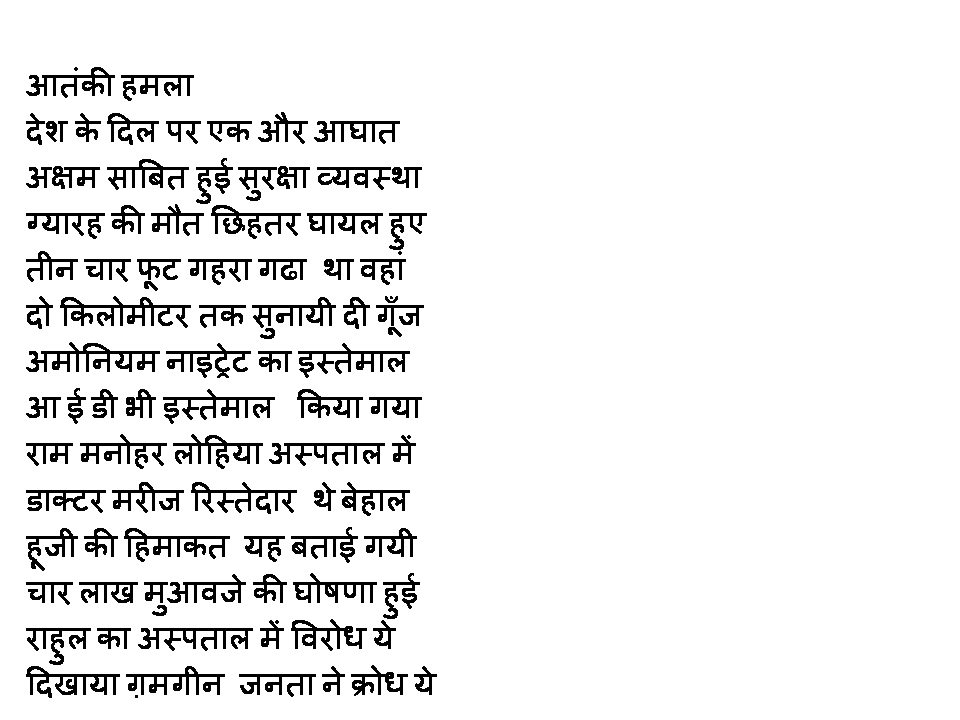
Atanki hamla
आतंकी हमला दो किलोमीटर तक सुनायी दी गूँज
देश के दिल पर एक और आघात
अक्षम साबित हुई सुरक्षा व्यवस्था
ग्यारह की मौत छिहतर घायल हुए
तीन चार फूट गहरा गढा था वहां
अमोनियम नाइट्रेट का इस्तेमाल
आ ई डी भी इस्तेमाल किया गया
राम मनोहर लोहिया अस्पताल में
डाक्टर मरीज रिस्तेदार थे बेहाल
हूजी की हिमाकत यह बताई गयी
चार लाख मुआवजे की घोषणा हुई
राहुल का अस्पताल में विरोध ये
दिखाया ग़मगीन जनता ने क्रोध ये
Saturday, September 3, 2011
YUVA LADKIYAN
आज भारत देश का आर्थिक , सामाजिक,सास्कृतिक,राजनैतिक व मानवीय पहलू एक बड़ी चुनौती के रूप में सामने आ रहे हैं वातावरण का बड़े स्तर पर प्रदूषण भी कम चुनौती नहीं है हम एक चौतरफा संकट के दौर से गुजर रहे हैं उदारीकरण और वैश्विकरण हमारे संकटों को दूर करने की "राम बाण" दवाई के रूप में पेश किये गए मगर हम देख रहे हैं कि एक तरफ भारी आर्थिक संकट, बेरोजगारी , छंटनी ,महंगाई ,लूट खसौट है और दूसरी और अपराध , छेड़खानी , बलात्कार , अपहरण , खरीद फरोख्त व दहेज़ कि जबरदस्त मर पद रही है ऐसी विकट परिस्थिति में महिलाएं व विशेष रूप से युवा लड़कियां बहुत ही तनाव , घुटन व असुरक्षा के माहौल में जी रही हैं
मौजूदा समय में इस समाज को अगर लड़कियों की नजर से देखें तो एक बड़ा हिस्सा समाज कामानसिक बीमारी से ग्रस्त दिखाई पड़ता है न छोटी बच्चियां सुरक्षित हैं ,न ही ७०-८० साल की ये बुजुर्ग औरतें कोई रिश्ता ऐसा नहीं बचा जो कलंकित न हुआ हो जयादातर लड़कियां उन्हीं के द्वारा धोखेबाजी का शिकार हुई जिन पर उन्होनें सबसे जयादा विश्वास किया आज जब आधे से अधिक बलात्कार स्वमं घरों में अपने सगे सम्बन्धियों व् परिचितों द्वारा किये जा रहे हैं तो अभिभावकों की अपनी बच्चियों के प्रति चिंता स्वाभाविक ही है एक शिक्षक का रिश्ता जो सबसे अधिक पवित्र मन जाता है , वह भी दागदार हुआ है|
इस समय आप देखें तो हरयाणा में सामाजिक मूल्यों में भरी गिरावट दिखाई पड़ती है I अपसंस्कृति की महामारी को आक्रामक ढंग से विस्तार दिया जा रहा है I बाजारी संस्कृति के फूहड़ दृश्य ,ग्लेमर की दुनिया की चकाचौंध ,नयी नयी कारें, मोबाईल , कैसिनो , नंगी फ़िल्में , पोर्नोग्राफी, घटिया साहित्य, घटिया कैसेट , स्त्रियों से सम्बंधित घटिया चुटकले , हरयाणवी पॉप म्यूजिक , साइबर कैफे के नाम पर सैक्स की दुकानें -- ये हैं आज के दौर के मनोरंजन के साधन I इसकी वजह से समाज निरंतर गिरावट की और जा रहा है, जिसका खामियाजा महिलाओं और खासकर युवा लड़कियों को भुगतना पड़ रहा है I
लड़कों के लिए नशे के नए पैकेज हैं I नशेडी बनाओ , सब्ज बाग दिखाओ I मारो खाओ , हाथ ना आओ I
लड़के माफिया बने हुए हैं I यह विडम्बना है की इस उर्जा वान तबके (लड़के व् लड़कियां ) को स्वस्थ समाज के बनाने का कम नहीं दिया गया I प्रेम के नाम पर क्रूरता का जनून है I तेजाब फैंकना इत्यादि सैंकड़ों उदाहरण मिल जायेंगें I युवतियों का जीवन और भी मुस्किल हुआ है I घर में , स्कूल में , कालेज में , बस में सफ़र करते हुए , बाजार में , नौकरियों में व् अन्य कार्य स्थलों पर I
Subscribe to:
Posts (Atom)
beer's shared items
Will fail Fighting and not surrendering
I will rather die standing up, than live life on my knees: